 IOSH
IOSH
Elephant poll urges world not to forget key issues
- Date posted
- 27 April 2026
- Type
- News
- Author
- Jeremy Waterfield
Tuesday 28 April is always a poignant day for workers’ safety and health. That’s because it’s both World Day for Safety and Health at Work and International Workers’ Memorial Day.
Who are the organisations behind workers' safety days?
World Day for Safety and Health at Work is an ILO initiative, while International Workers’ Memorial Day is organised by the TUC.
This year, it seems an appropriate day to reveal what occupational safety and health (OSH) professionals believe to be the chief ‘elephant in the room’ when it comes to their practice.
All of us will talk about the weather, we’ll talk about sport, we’ll talk about anything but the ‘elephant in the room’. The elephant in question, of course, being metaphorical and used to describe that significant problem, or sensitive issue everyone is aware of but will avoid discussing.
So, IOSH took to LinkedIn to poll its members and fellow OSH professionals on what they would describe as the elephant in the room for their sector. And, asked to restrict themselves to one elephant rather than a whole herd, their answers highlighted their concerns on a number of key issues, but especially health and safety culture, economic pressures and professional readiness. Here’s just a flavour of the different ‘elephants’ that were suggested, with comments:
Health and safety culture
“Great boards that show number of days since last incident. They silence accident and near-miss reporting out of fear of being the one person responsible for taking the number back to zero. This destroys the speak-up culture and hides the real issues that need protective measures”
“Performance targets focused on reducing the number of incident reports can be misleading. A lower number of reports does not automatically mean a safer workplace - it can just as easily indicate underreporting, poor culture, or reluctance to raise concerns. The real measure should be the quality of investigations, how effectively root causes are identified, and whether meaningful improvements are implemented to prevent recurrence. Strong performance is not fewer reports; it is better learning, better action, and safer outcomes.”
“The gap between knowing and doing in safety culture. We have the systems, procedures and reporting tools, but consistent behavioural ownership at all levels is still where many organisations struggle.”
Economic pressures
“Risk normalisation under economic stress, especially with the global economic crisis and what was ‘unacceptable’ becoming ‘manageable’.”
“Offering bonuses and financial rewards for hitting production and manufacturing targets are often the real root causes of people taking unnecessary risk and poor safety decisions.”
LinkedIn poll response
“Offering bonuses and financial rewards for hitting production and manufacturing targets are often the real root causes of people taking unnecessary risk and poor safety decisions.”
“Employees should not be pressured to return to work when unwell for a number of reasons, no matter how much of an effort their absence has on their team.”
Professional readiness
“The change required of the health and safety profession and the capability required to move into the next decade. We are facing a changing workforce and a requirement to change the way we work – are we learning today to have an impact tomorrow?”
“Neurodiversity inclusion. And equitable practices over equality.”
“The employee with a chronic health condition.”
New report highlights psychosocial risks
A global report, launched last week by the International Labour Organization (ILO), has linked more than 840,000 deaths a year to psychosocial risks at work. The report details how poorly designed or managed work, featuring high demands, long hours and job insecurity in poorly managed workplaces are damaging workers’ health and the economy.
It didn’t say so, but could it be that mental ill-health caused by work is what the ILO would call the elephant in the room?
These work-related psychosocial risks are associated with cardiovascular diseases and mental disorders, including suicide. The ILO report, The psychosocial working environment: Global developments and pathways for action, highlights how the way work is designed, organised and managed is having a growing impact on workers’ safety and health. It warns that psychosocial risk factors – including long working hours, job insecurity, high demands with low control, and workplace bullying and harassment – can create harmful working environments if not properly addressed.
Chief challenge
Ruth Wilkinson, IOSH Head of Policy and Public Affairs, said: “Psychosocial risk to workers’ mental health has become one of the key challenges facing our profession as we continue to adopt new ways of working in a changing world of work.
“If we put effort and investment into prevention-first approaches to address psychosocial hazards and risks, and we work to get the psychosocial conditions and workplace culture right, we can not only begin to safeguard workers’ mental and physical health but also make great strides towards strengthening productivity, improving business performance and achieving sustainable economic growth.”
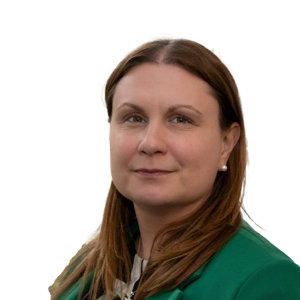
Ruth Wilkinson
- Job role
- Head of Policy and Public Affairs
- Company
- IOSH
“We certainly can’t afford for this issue to continue to be our elephant in the room. All those working to help an organisation and those who are in it to thrive need people to feel psychologically safe, where stigma is tackled and inclusive cultures are created. Creating safer and healthier workplaces requires workers to have a voice, where they can openly discuss concerns and the causes of psychosocial risks and be involved in identifying control measures and finding practical solutions.
“That’s what we’ll be doing at IOSH, starting this week at The Health and Safety Event, in Birmingham – we invite those planning to visit the event to come and talk to us,” said Ruth.
What is your health and safety elephant in the room?
Tell us which issue you think is being overlooked and why.
Last updated: 08 May 2026

Jeremy Waterfield
- Job role
- PR & Public Affairs Executive
- Company
- IOSH


