 IOSH
Sun safety
Manage outdoor workers’ exposure to solar radiation
Anyone who works outside may be concerned about the effects of sun on their skin. We call this solar radiation. Find out why it’s harmful, along with advice on what precautions to take.
Facts about solar radiation
- Sun exposure causes 99 per cent of non-melanoma skin cancer and up to 65 per cent of malignant melanoma skin cancer
- Up to 80 per cent of UV rays can penetrate clouds
- One in every three cancers diagnosed is a skin cancer
- Currently, between 2 and 3 million non-melanoma skin cancers and 132,000 melanoma skin cancers occur globally each year
- Up to 90% of skin cancer deaths could be prevented if exposure to UV is controlled.

What is solar radiation?
This is the radiant energy emitted by the sun. The sun emits different kinds of light, some of which we can see and others that are invisible.
- Visible spectrum – the light that we see.
- Infrared radiation – felt as heat.
- Ultraviolet (UV) radiation – which can damage DNA in skin cells and cause sunburn and skin cancers.
-
This has the longest wavelength and is easily transmitted through the atmosphere (95 per cent of UVA reaches the Earth’s surface). UVA can penetrate the middle layer of our skin (dermis) leading to ageing of skin cells, DNA damage and skin cancers.
-
This has a shorter wavelength and some UVB is absorbed by Earth’s ozone layer. Only about 5 per cent of UVB reaches the Earth’s surface. UVB reaches the outer layer of our skin (epidermis) which can damage skin cells, cause sunburn and skin cancers.
-
This also has a shorter wavelength and is the highest energy portion of the UV spectrum. UVC does not reach the Earth’s surface, as it is blocked by the ozone layer in the atmosphere. People can be exposed to UVC via artificial sources such as lasers or lamps.
Solar radiation is classified as a group one carcinogen by the International Agency for Research on Cancer (IARC), part of the World Health Organization (WHO). It is treated as a definite cause of cancer in humans. UV radiation (UVA, UVB and UVC) and UV-emitting tanning devices are also classified as definite human carcinogens (group one) by IARC.
The reality is that the risks to ordinary holidaymakers, targeted by sun product advertising campaigns, are not comparable to the risks faced by millions of outdoor workers. For significant periods of the year, outdoor workers are typically exposed to solar radiation for hours at a time, day in, day out. They may have long-term solar radiation exposure to particular body parts such as head, neck, arms and hands (legs and torso may be exposed intermittently, too).
What is artificial UV?
Artificial UV sources are those that are human made. People can also be exposed to these in the workplace.
- Black-light lamps – UV is emitted from the bulbs that produce mostly UVA and visible light. These bulbs are usually purple coloured and are also found in ‘insect-zapping’ traps.
- High-pressure xenon and xenon-mercury arc lamps, plasma torches, and welding arcs. These are used for UV ‘curing’, disinfection, to simulate sunlight and in some car headlights. Plasma torches and welding arcs are particular risks in workplaces.
- Mercury-vapour lamps – comprising an inner and outer bulb and sometimes used to light public areas such as gymnasiums or streets. If the outer bulb is broken, then UV exposure can occur.
- Phototherapy (UV therapy) – used to treat some skin conditions such as psoriasis. UVA and UVB can be used in the treatment.
- Sunlamps, sunbeds, tanning beds and booths – exposure depends on the lamps used, and how long and how often a person uses the device. Most of these UV lamps emit UVA and some UVB.
- UV lasers – exposures can be harmful if UV lasers are used improperly. Thermal, acoustical and photochemical processes can cause biological damage such as burns and irreversible injuries to the eyes and skin. Exposure does not need to be direct but can include indirect exposure through beam reflections.
What’s the issue?
-
Awareness of solar radiation risks is generally poor, according to research into sun exposure in the UK construction sector. Two thirds of workers outside for an average of nearly seven hours a day thought they were not at risk or did not know whether they were or not.
The study – commissioned by IOSH from the University of Nottingham – also found that 59 per cent of construction workers reported having sunburn at least once in the last year (2017). Just over 40 per cent thought there was no need to wear sunscreen on a cloudy day.
Most did not use measures to protect themselves against sun exposure. Both workers and managers did not see sun safety as an important issue, mainly because of a misperception that the climate in the UK does not pose a high risk of skin cancer.
Other research commissioned by IOSH into sun exposure at work in Britain found that malignant melanoma kills nearly 50 people each year, with 240 new cancer cases being registered. The majority affected are men, and just under half those diagnosed with malignant melanoma linked to occupational exposures are under 65.
These findings, from Imperial College London, are echoed in studies from around the world, including North America, Australia and other European countries. In addition, at least 1,500 new cases of work-related non-melanoma skin cancer are also registered each year in Britain, with 12 deaths.
Imperial College’s research shows that 55 per cent of work-related non-melanoma skin cancer cases and 42 per cent of malignant melanoma cancer cases involve construction workers. Other key sectors include agriculture, public administration, defence and land transport.
-
UV exposure can also cause other health conditions, such as:
- sunburn from the sun or artificial devices
- premature ageing of the skin and wrinkles, liver spots, actinic keratosis and solar elastosis
- weakening of the immune system, which can lead to reactivation of herpes (triggered by sun exposure) and cause vaccines to be less effective
- eye conditions, including:
- inflammation of the cornea
- cataracts
- eye cancer
- photokeratitis and photoconjunctivitis
- pterygium and pinguecula.
All of the conditions can impair vision.
Some medications can make people more sensitive to UV exposure and some medical conditions can be made more severe.
-
This depends on what people involved with your organisation do, and the country you operate in.
Exposure will vary according to:
- the time of day – strongest between 10am and 4pm
- the time of year – stronger during the spring and summer seasons
- the latitude (distance from the equator) – UV exposure increases the closer you are located to the equator
- the altitude – the higher the elevation, the more UV reaches the location
- the clouds – these can cause various effects, but UV can still reach the ground when clouds are present
- the surrounding surfaces near the working area – for example, water, snow, ice, sand, pavements and grass can reflect UV, increasing the exposure
- the air concentration – the ozone layer in the Earth’s atmosphere can filter out some UV
- what substances are being used – some substances can increase photosensitivity.
An individual worker’s skin type is particularly important. Skin type affects how skin reacts in the sun and how likely individuals are to develop skin cancer. Remember that skin type is genetic – it does not vary according to how ‘tanned’ someone is. The Fitzpatrick skin type scale is used to classify skin types based on six categories, I to VI, by medical professionals.
Those that fall into categories I or II skin are at a higher risk of developing skin cancer when exposed to UV. However, it is important to remember that anyone exposed to UV can develop skin cancer regardless of their skin type.
-
Anyone working outside in any industry can be affected by solar radiation, for example:
- agriculture and rural
- construction, dock and maritime
- grounds and landscape management
- outdoor leisure
- entertainment and professional sports
- refuse collection and recycling
- road working.
-
Examples of job roles that can often be exposed to solar radiation include:
- construction workers
- dock and maritime workers
- farmworkers and other rural workers
- grounds and landscape workers
- outdoor leisure and entertainment workers
- painters and decorators
- postal workers
- professional outdoor-based sportspeople
- railroad workers
- refuse and recycling collectors
- road workers
- roof workers.
How to manage solar radiation
Here are some typical actions to control exposure, which can be implemented as part of a sun safety strategy or initiative. These are relevant if you’re a manager or business owner, safety and health professional or a worker.
- Check the ultraviolet (UV) index from the weather forecast and communicate information to relevant workers, alongside prompts to use protective measures to minimise exposure. Weather forecast apps and websites usually include the UV index. You can buy monitoring devices that trigger action at certain UV levels. Action should be taken when the index is at level three or above.
- Avoid or minimise exposure to direct sunlight in the middle of the day, as 60 per cent of daily UV occurs between 10am and 2pm. Try to minimise exposure until at least 3pm, if possible.
- Regularly swap job tasks between workers so that everyone on the team can spend some time in the shade.
- Use heavy duty cover or shade when working outdoors in the sun – shade can cut UV exposure by 50 per cent or more. Check protection levels with your shade supplier.
- Take rest breaks in shaded areas or indoors. Siting water points in shaded areas or indoors can help encourage workers to take breaks out of the sun.
- Add UV protective films or tints to plain glass, non-laminated vehicle windows if employees are regularly driving during high-UV months. Lamination can filter most UVA. On side windows, lamination, films or tints are only effective when the windows are closed.
- Use air-conditioning to help cool areas and skin. But remember this does not reduce UV exposure.
- Raise awareness of solar radiation issues with workers using toolbox talks or training sessions.
- Wear long-sleeved, loose-fitting tops and trousers when working outdoors during months with high UV levels. You’ll need to check the ultraviolet protection factor (UPF) rating and ensure the design of the clothing suits the work and does not introduce other hazards. ‘High-wicking’ fabrics are designed to draw moisture away from the skin. Workers should also keep their top clothing on when working to reduce skin exposure to the sun.
- Wear wide-brimmed hats that shade the face, head, ears and neck. Or, if safety helmets are worn, use those fitted with ‘legionnaire-style’ neck flaps. Ensure personal protective equipment (PPE) fits properly and comfortably, especially when the temperature is rising. PPE suppliers can be contacted about getting the most appropriate equipment for the workforce. Workers should also be involved in the PPE choices and ensure they wear it at the right times.
- Wear sunglasses with 100 per cent UV protection or use UV-filtering safety goggles with the same level of protection if the work requires physical eye protection. Look for the ‘UV 400’ marking.
- Use high-factor sunscreen on skin that cannot be protected by other measures, for example, hands, face and lips. Sunscreen should be water-resistant and have ‘broad spectrum’ protection, with a sun protection factor (SPF) of at least 30 and a UVA rating of four or five stars. Sunscreen should only be used alongside other protective measures – it’s best not to rely on sunscreen alone. It should be applied half an hour before exposure and reapplied at least every couple of hours. If skin has been exposed to dusts, wash it before reapplying sunscreen to avoid causing dermatitis. More is better – it’s recommended that sunscreen should be applied generously.
What is sun protection factor (SPF)?
SPF is a measure for how good a substance is at blocking harmful UVB. The higher the SPF rating, the better the protection against UVB. For example:
- SPF 15 will block 93 per cent of UVB
- SPF 30 will block 97 per cent of UVB
- SPF 50 will block 98 per cent of UVB.
However, SPF does not measure protection against UVA. This is why relying on sunscreen alone as a control measure is not recommended.
Encourage workers to check their skin for changes such as moles or other skin differences. Detecting the early signs of skin cancer and undergoing early treatment can save lives.
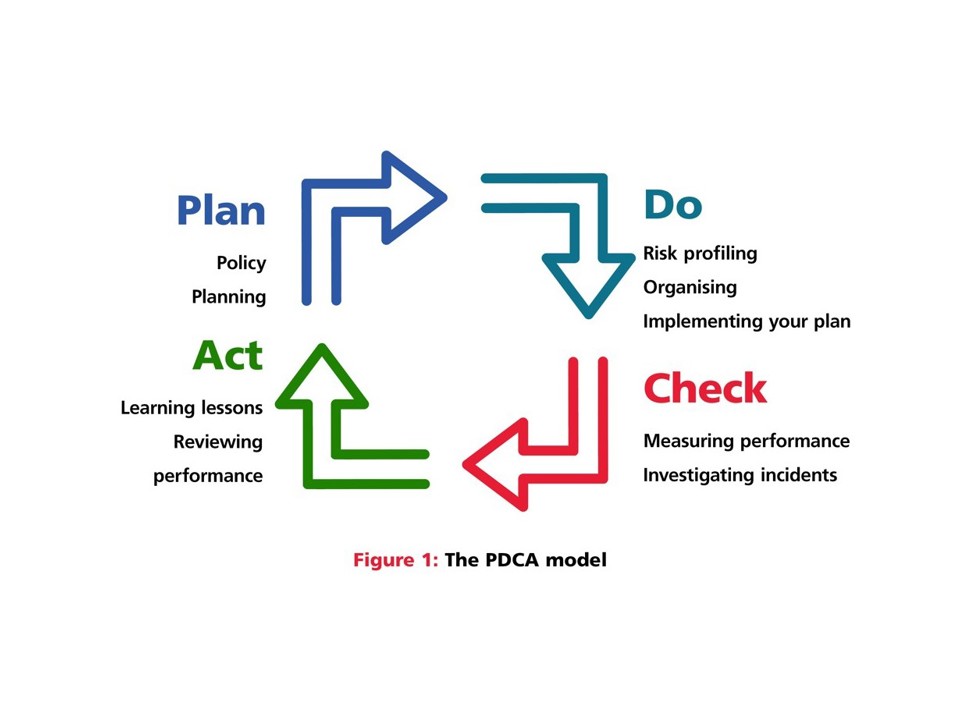
Managers and business owners
Following the plan, do, check, act (PDCA) health and safety management system method. This provides eight simple steps to reduce sun exposure for outdoor workers.
-
Appoint a competent person to manage solar exposure risks
Mitigating solar radiation exposure is achievable and does not have to be costly. The responsible person should be competent to undertake the task and start by developing a plan to assess the risks of exposure. Consider these points.
- Do any workers regularly work outside?
- What time of day or year do they work outside?
- Are workers exposed to higher levels of solar radiation for significant periods? Remember that even on cloudy days there can be enough radiation to damage the skin. Between 30 and 40 per cent of UV can penetrate overcast skies, and up to 80 per cent gets through sky that is half covered in clouds. The strength of solar UV is not connected to temperature and can bounce off reflective surfaces such as metal, water, snow, ice, pavements, some concrete finishes and grass.
- Where are the workers located geographically? Consider their altitude, latitude and the ozone content in the area.
- Are workers exposed to any photosensitising substances?
- Are workers protected from the effects of solar radiation?
-
Assess organisational solar exposure risks
Consider who might be exposed to solar radiation throughout the organisation. What tasks will they be doing that may expose them to UV?
Share solar exposure risks with workers and contractors
Communicate the risks to those who are potentially exposed and involved with outdoor working tasks. As good practice, whether it is law or not in your country, workers should be informed of the level of risk to health and what precautions they must implement to keep themselves and others safe. Contractors should also be informed of solar exposure risks.
Introduce controls to reduce solar radiation exposure
This will include:
- moving outdoor work to an inside setting, if possible
- reducing exposure by providing shade, covers and cooling systems. Reflective surfaces can also be covered or moved
- implementing administrative controls such as changing work schedules, so work is carried out when UV levels are lower
- providing suitable personal protective equipment (PPE) where required, such as sunscreen or clothing, to protect workers.
Provide training and clear instructions on solar safety
It is good practice to provide solar exposure awareness training to workers whose activity may involve working outdoors. They should be given information about the risks and how exposure can be prevented.
Research we commissioned into the United Kingdom construction sector, focusing on large construction companies, found more than 70 per cent of workers had never had any sort of training on the risks of working in the sun.
-
Investigate incidents linked to solar exposure
Solar exposure incidents must be investigated to identify causes. The investigation must check if:
- the solar exposure plan was accurate and shared
- if local procedures were implemented and followed correctly
- whether those exposed had been informed of the risks associated with solar exposure
- whether those exposed had been provided with relevant training and PPE.
A note should be made in the personal records of those exposed with solar-related injuries. Records should include when the incident happened, how long it lasted, and the outcome of the exposure.
Consider submitting exposed workers to an organisation health monitoring and surveillance programme.
Monitor controls and arrange health surveillance
Monitoring controls is important to check whether they are suitable and working to eliminate or reduce solar exposure.
Health monitoring can also be important. Workers should undergo regular health checks by a competent medical professional. This may be through occupational health.
-
Review and apply lessons learned
After any incident and investigation, learning lessons must be recognised and applied to the solar exposure plan and health and safety management system. This will help to prevent and reduce the chance of exposures recurring.
The solar exposure plan should be reviewed regularly. This will ensure it remains as accurate as possible. Good practice would be to complete reviews on an annual basis or sooner, if required. For example, a more frequent review may be required if a greater amount of work must be completed outdoors, as more workers may be at risk.
Occupational safety and health (OSH) professionals
OSH professionals are likely to be heavily involved with their organisation’s solar exposure plan. This could be to help implement a plan, liaise with an external provider who is implementing a plan or support with the maintenance of a solar exposure system that is already in place.
You will need to work with both managers and workers to help risk assess, implement controls and eliminate or reduce solar exposures.
You may be required to:
- regularly consult with workers
- provide support with the organisational solar radiation risk assessment
- support with identifying and implementing suitable controls by following the ‘hierarchy of control’. For example, introducing reduction, engineering, administrative and suitable PPE controls
- support with the implementation or maintenance of a solar exposure plan
- routinely inspect known outdoor working tasks and activity areas
- check that workers are following and understand procedures and safe systems of work
- source and provide suitable solar radiation information and training
- investigate incidents and exposures
- support with health monitoring and surveillance requirements
- support with evaluations and act on any lessons learnt to prevent future solar exposure incidents.

Workers
You should minimise risks from working in the sun by taking necessary precautions. See the ‘How to manage solar radiation’ section of this page. Do regular checks to look out for moles or other skin differences such as:
- new growths
- changes in shape, size, colour or texture of existing moles or spots
- sores or spots that do not heal
- spots that look different to other spots in the same area.
Report any concerns to your manager, a medical professional, or your workplace occupational health provider.