 IOSH
IOSH
Time to break the cycle of tragedy this Farm Safety Week
- Date posted
- 23 July 2026
- Type
- Opinion
- Author
- Richard Bate CFIOSH
- Estimated reading time
- 3 minute read
In Farm Safety Week (20-24 July), IOSH President Richard Bate calls for more to be done to prevent harm in the agricultural sector.
Earlier this year, a farmer in his 70s tragically lost his life after falling into a grain silo in Suffolk. This was a stark reminder of the very real dangers faced in agriculture and that incidents like this, often involving confined spaces, can turn fatal in seconds.
This tragedy is not an isolated event. It is part of a persistent pattern that continues to make farming the most dangerous industry in the UK – a reality we must urgently address.
Agriculture employs just one per cent of the UK workforce, yet it accounts for 21 per cent of all worker fatalities. But this isn’t just a figure. Behind them lie devastated families, fractured communities, and lives cut short.
During my year as President of the Institution of Occupational Safety and Health (IOSH), I will not accept that this is simply “the way things are”. Neither should you. Because while statistics are sobering, it’s the human stories that truly bring home the consequences.

Richard Bate CFIOSH
- Job role
- President
- Company
- IOSH
I think of Laura Simmons, a 22-year-old shepherdess described as lively, caring and adventurous, who lost her life when her quad bike overturned. I think of a young worker left with life-changing injuries after being caught in machinery. And I think of a young father who fell through a fragile roof while helping a friend, sustaining severe injuries.
These were not unavoidable accidents. They were preventable. All unacceptable.
Farming continues to bear more than its fair share of risk, and addressing this requires honesty and action. This issue is deeply personal to me. I grew up in a farming community in North Wales, with family ties to the land stretching back generations. As an operational paramedic and safety professional, I've seen first-hand how tragedies affect rural communities – and I’ve also seen how pressures on farmers can lead to compromises in safety.
Those pressures are growing. Financial uncertainty, long hours and isolation are taking a toll, and we must recognise that mental health and physical safety are closely linked. Fatigue, stress and distraction increase risk exponentially.
At the same time, the world of work is changing. New technologies, including AI, offer opportunities to improve safety, but also introduce new challenges if not managed appropriately. Globally, an estimated 7,500 people die every day due to unsafe or unhealthy working conditions, reminding us just how much remains to be done.
Farm Safety Week is about more than awareness; it is about action. We need a fundamental shift in how safety is prioritised across agriculture. That means:
- strong leadership to set expectations and culture
- better risk awareness, particularly around machinery and vehicle operation and working at height
- open conversations to tackle mental health stigma
- practical support to help farmers work safely
- collective responsibility across the whole industry.
Every product we rely on has a human story behind it. We must ensure that the story is never one of preventable harm.
This Farm Safety Week, I’m asking everyone connected to agriculture to play their part. I’m asking them to challenge complacency, be brave, speak up and act.
Together, we can make farming a safer and healthier profession – and finally begin to break this tragic cycle.
- Originally published by Farm Safety Foundation.
Hidden harm on farms
Check out our research showing how many farmers are not reporting health and safety incidents.
Last updated: 04 August 2026
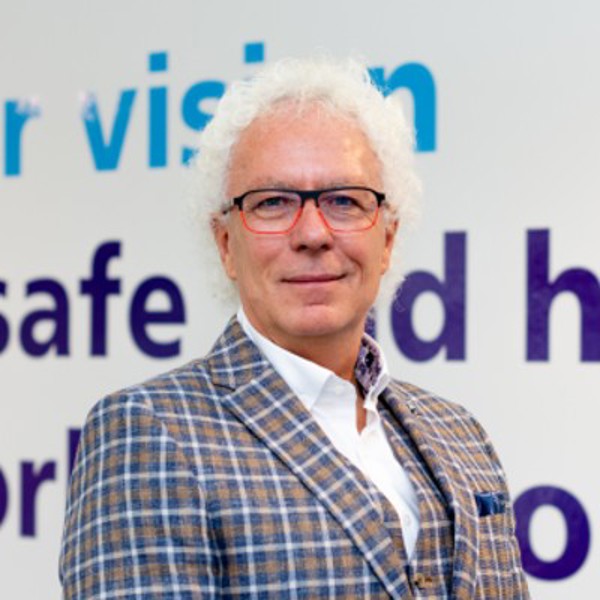
Richard Bate CFIOSH
- Job role
- IOSH President-Elect


